
Fit to Frame Blinds
Pleated Fit to Frame Pleated blinds,
no drill required
Our Fit to Frame pleated blinds click onto the bead of your uPVC window or door instead of the frame itself. No screws, no drilling, no risk to your warranty. Measured, made and fitted by Homefair's own team, with a fixed price quoted at survey.
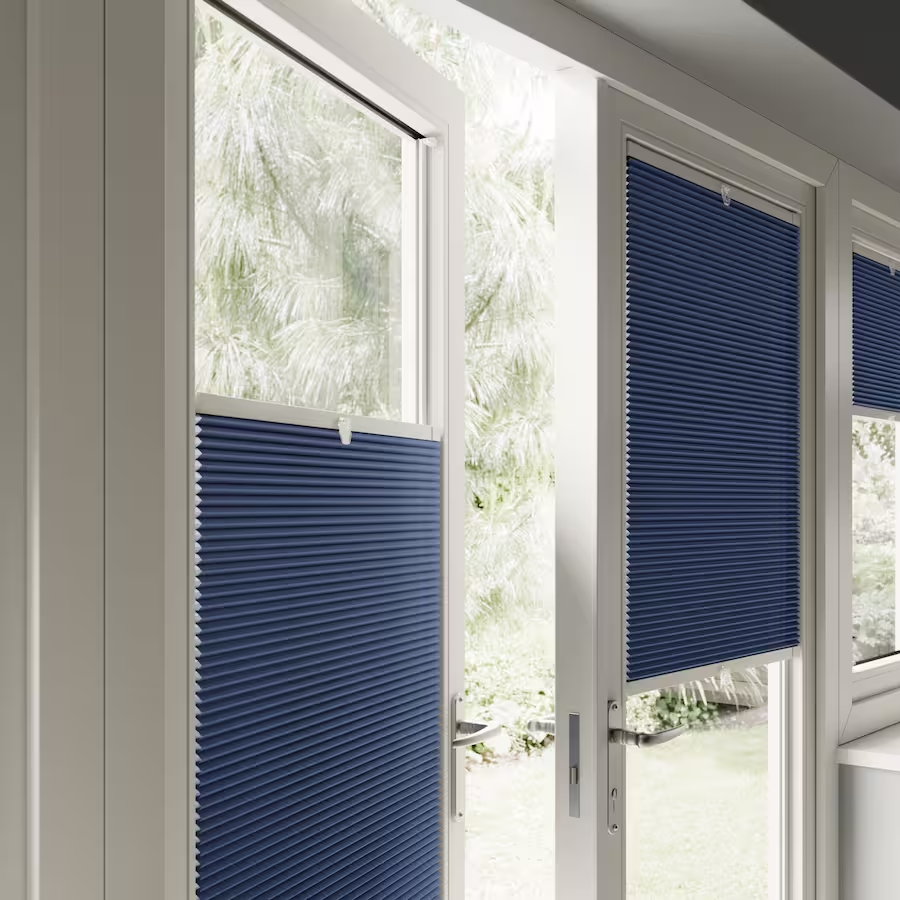
Clips to the bead, not the frame
Most uPVC windows and doors have a thin strip of rubber beading holding the glass in place. Fit to Frame brackets slide in behind that beading instead of into the frame, so nothing gets drilled, screwed or glued.
The headrail then clips onto those brackets, and the pleated fabric concertinas up and down on its own side tensioners. It tracks straight even on a door that gets slammed a few times a day.
Small brackets sit between the glass and the rubber beading on your uPVC frame. The blind clips onto those, not into the uPVC itself.
One of our surveyors measures your window or door for free, with no obligation. Our own team fits it once it's made, not a subcontractor.
The price you're quoted at survey is the price you pay. No call-out charges, no upsell on fitting day.
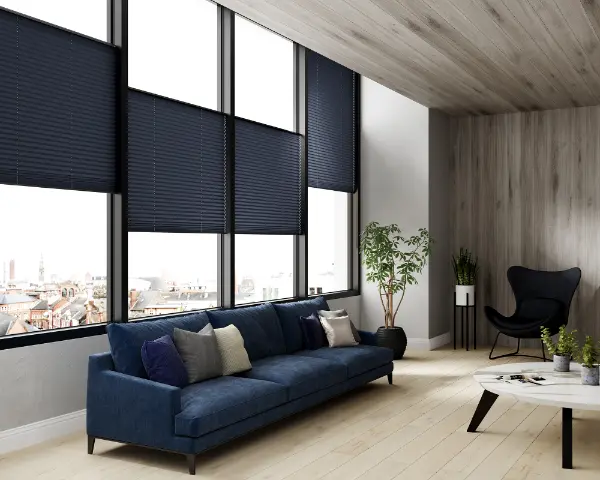
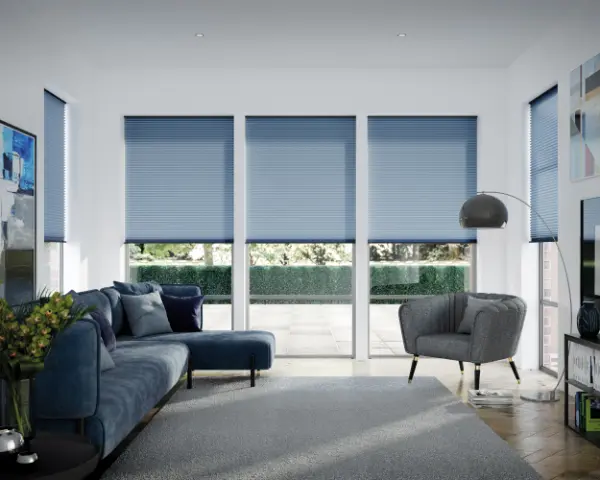
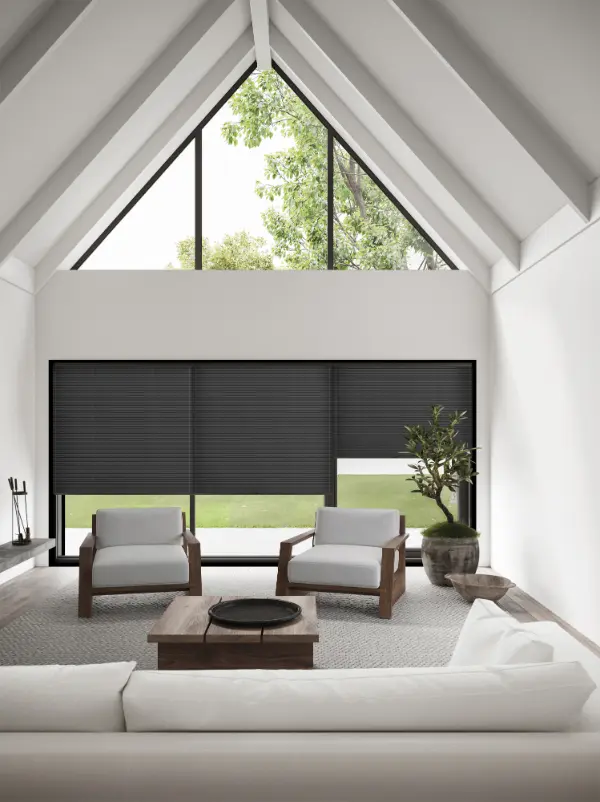
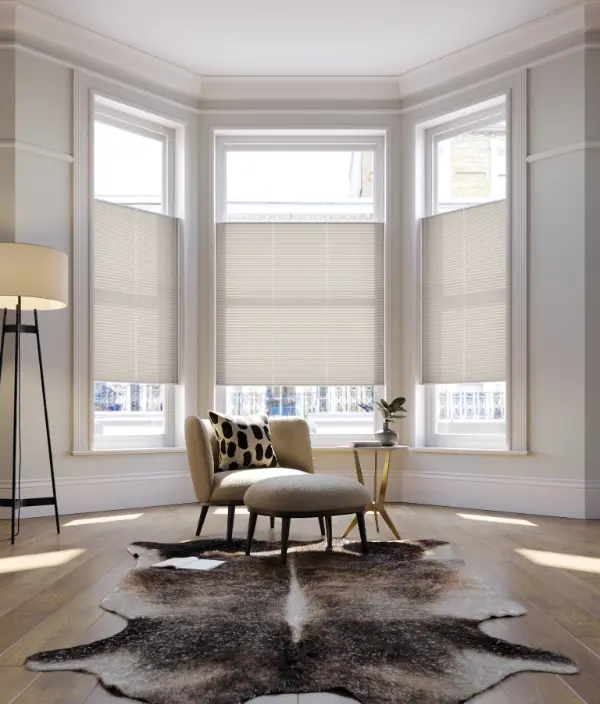
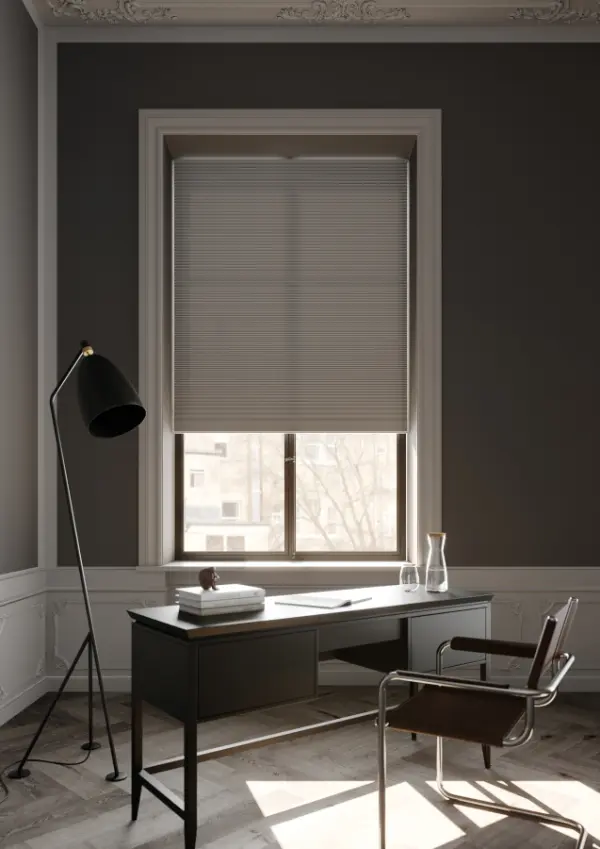
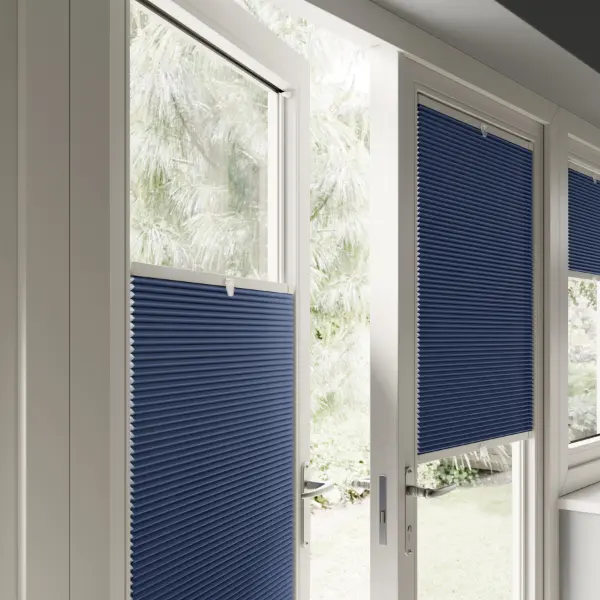
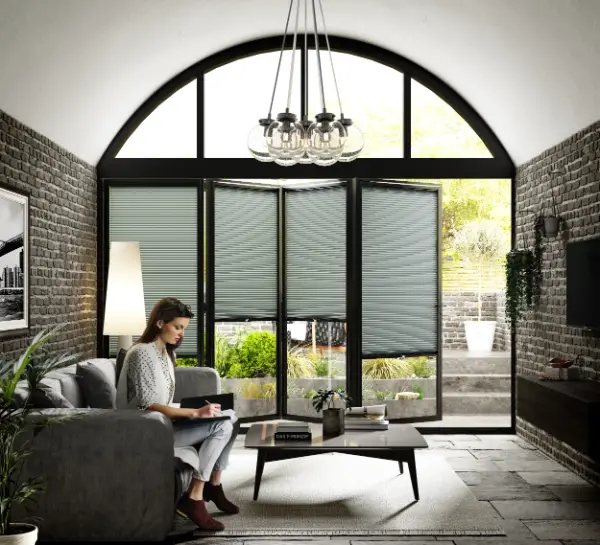
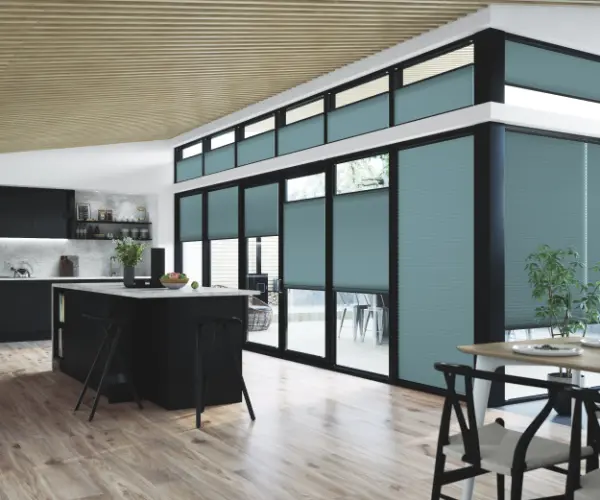
Be inspired by Fit to Frame Pleated Blinds
Get a feel for how these blinds could look in your home
Why choose Fit to Frame pleated
Six things that set this system apart from a standard pleated blind hung on screwed-in brackets.
The bracket clips behind your uPVC beading. Your frame stays exactly as the window fitter left it, warranty and all.
Cordless side channels hold the pleats under light tension, so the fabric doesn't billow or snag when a door gets slammed shut.
Pull from the top for privacy with light still coming in underneath, or from the bottom for full coverage. No cords trailing either way.
The pull mechanism sits inside the rail, not on a dangling cord. Safer in homes with small children or pets underfoot.
Blackout, light filtering, thermal and patterned options, all built around the same Fit to Frame bracket.
French doors, bifolds and conservatory glazing with a bead take the same bracket, so the look stays consistent from room to room.
Top-down, bottom-up, or both
Most pleated blinds only pull one way. Fit to Frame can be set up to move from the top, the bottom, or both, depending on what the room needs.
Pull the fabric up from the bottom rail for full coverage, or stop it part-way for a mid-window line. Common in living rooms and kitchens.
Drop the fabric down from the top instead, keeping your view at eye level while blocking the sky above. A frequent choice for bathrooms and ground-floor rooms facing the street.
Both rails move independently, so you can stack privacy in the middle and let light in above and below. The most flexible setup, and the one we fit most in bedrooms.
Four ways to control the light
All four fabrics fit the same Fit to Frame system. Pick on looks first, then on how much light you actually want gone.
Blocks the vast majority of daylight. Some light still creeps in around the side channels, so don't expect a cinema-dark room in midsummer.
Softens harsh sun without losing the room to gloom. The usual pick for living rooms and kitchens.
A thicker fabric construction that helps keep heat in during winter. Not as warm as a true honeycomb cell, but a step up from standard fabric.
Texture and print for rooms where the blind is doing some of the decorating, not just blocking light.
Built around uPVC, but not only windows
Anywhere there's a standard rubber bead, the bracket can usually go.
The bead-fit bracket was designed around standard casement and tilt-and-turn frames. It's where the system fits most naturally.
Brackets clip on without adding anything that catches when the door's opened and closed several times a day.
Pleated fabric handles temperature swings reasonably well, and the bead-fit bracket suits the narrower frames conservatories often have.
Each pane gets its own blind, fitted to its own bead, so the whole run still opens and folds without a blind in the way.
Nothing gets drilled, so landlords tend to say yes and tenants get their deposit back when they move on.
Where a previous drilled bracket has cracked a uPVC frame, or you'd simply rather not risk it, the bead-fit clip is the safer route.
Other no drill styles and system
Concertina fabric, light filtering through to blackout.
You're hereSimple roll up and down, wipeable fabrics.
View range →VenetianAluminium slats, tilt for light control.
View range →CellularHoneycomb cells, better insulation.
View range →What people say after fitting
The brackets clip straight onto the bead. No drilling near my new uPVC frame at all, and it took the fitter about fifteen minutes for two windows.
Set mine up top-down so I still get light in the kitchen without anyone seeing in off the road.
Landlord was fine with it once I explained nothing gets drilled. Taking them with me when the tenancy ends.
Fit to Frame pleated, answered
The questions our surveyors get asked most about this system.
What is a Fit to Frame pleated blind?
It's a pleated fabric blind that clips onto small brackets fitted behind the rubber beading of your uPVC window or door, rather than being screwed into the frame. The fabric concertinas up and down on cordless side tensioners.
Will it damage my window frame?
No. The bracket sits between the glass and the existing beading, so nothing gets drilled, screwed or glued into the uPVC itself.
Does it work on all uPVC windows?
Most, as long as there's a standard rubber bead holding the glass in place. Very old or non-standard beading can need a different bracket, which your surveyor checks at the free survey.
Can I fit it to a wooden frame?
Only if the frame has the same kind of beading a uPVC window does. Most painted timber casements don't, so a screw-fixed bracket usually suits wooden frames better. We'll tell you honestly which is right for your window.
Is it child safe?
Yes. There's no dangling cord. The pull mechanism is built into the rail, which is the cord-free standard most current safety guidance recommends for homes with young children.
Can I control light from the top and the bottom?
Yes, if you choose the top-down, bottom-up version. Both rails move independently, so you can drop the top down for privacy while still letting light in underneath.
How long does fitting take?
Most single windows take fifteen to twenty minutes. A run of bifold doors or several large windows in one room takes longer, and your surveyor will give you a realistic time on the day.
What if my frame doesn't have a bead?
Then bead-fit brackets won't hold properly, and we'll recommend a different fitting method instead. Better to find that out at survey than end up with a blind that won't stay put.
Ready for blinds that just clip on?
Book a free, no-obligation survey and we'll measure, quote and fit your Fit to Frame pleated blinds, with a fixed price and no drilling near your frame.
Free survey. Fixed price at quote. No obligation to book.